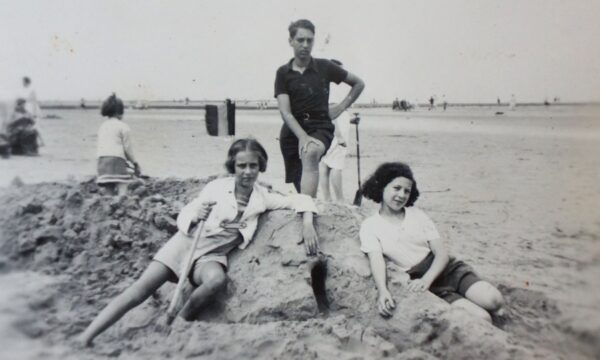

Eva Schloss, a Holocaust survivor who dedicated her life to educating others about the atrocities of the Holocaust and the stepsister of famed diarist Anne Frank, has passed away at the age of 96, according to her foundation.
The Anne Frank Trust UK, where Schloss served as honorary president, announced on Sunday that she died on Saturday in London, where she resided.
King Charles III of the United Kingdom expressed his admiration, stating he was “privileged and proud” to have known Schloss. He highlighted her efforts in founding the charitable trust aimed at helping young people challenge prejudice. The King remarked, “The horrors that she endured as a young woman are impossible to comprehend, and yet, she devoted the rest of her life to overcoming hatred and prejudice, promoting kindness, courage, understanding, and resilience through her tireless work for the Anne Frank Trust UK and for Holocaust education worldwide.”
The European Jewish Congress also issued a statement on X, expressing their “deep sadness” at her passing. They described Schloss as a “powerful voice” advocating for Holocaust education.
Born Eva Geiringer in Vienna in 1929, Schloss escaped with her family to Amsterdam after Austria’s annexation by Nazi Germany. There, she befriended Anne Frank, whose diary would become one of the most enduring accounts of the Holocaust. Like the Franks, her family spent two years in hiding to avoid Nazi capture before being betrayed, arrested, and deported to Auschwitz.
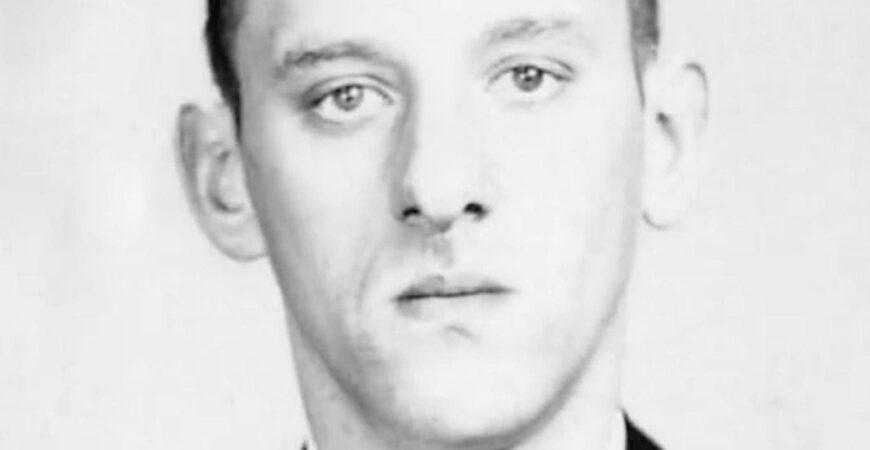
Schloss and her mother, Fritzi, survived the camp until its liberation by Soviet forces in 1945. Her father, Erich, and brother, Heinz, did not survive.
After the war, Eva relocated to the UK, married German-Jewish refugee Zvi Schloss, and settled in London. In 1953, her mother married Otto Frank, Anne’s father, who was the sole survivor from his immediate family.
Anne Frank died of typhus at Bergen-Belsen concentration camp at age 15, just months before the end of the war.
For many years, Schloss did not speak publicly about her experiences, citing wartime trauma that left her withdrawn and unable to connect. In a 2004 interview with The Associated Press, she explained, “I was silent for years, first because I wasn’t allowed to speak. Then, I repressed it. I was angry with the world.”
Her perspective changed after she spoke at an Anne Frank exhibition opening in London in 1986. From that point forward, Schloss committed herself to educating younger generations about the Nazi genocide. Over decades, she shared her story at schools, prisons, and international conferences, and authored books such as *Eva’s Story: A Survivor’s Tale by the Stepsister of Anne Frank.*
Even into her 90s, Schloss continued her advocacy. In 2024, she emphasized the importance of remembrance, stating, “We must never forget the terrible consequences of treating people as ‘other’.”
Eva Schloss is survived by her three daughters, along with grandchildren and great-grandchildren.